

Why Is Phantom Limb Syndrome Worse at Night? Treatment in Houston, TX
Many amputees notice that phantom limb syndrome intensifies at night, largely because the quiet environment and lack of daytime distractions allow the brain to hyper-focus on misfiring nerve signals. Led by skilled pain specialists Dr. George Atallah, Dr. Shervin Harandi, and Dr. Zehra Hooda, our team provides personalized, advanced interventional treatments to calm overactive nerves. We are dedicated to finding the root cause of your nighttime pain spikes and delivering therapies that offer lasting relief, allowing you to finally get the restful sleep you need. For more information, contact us or request an appointment online. We are located at 902 Frostwood Dr #235, Houston, TX 77024.
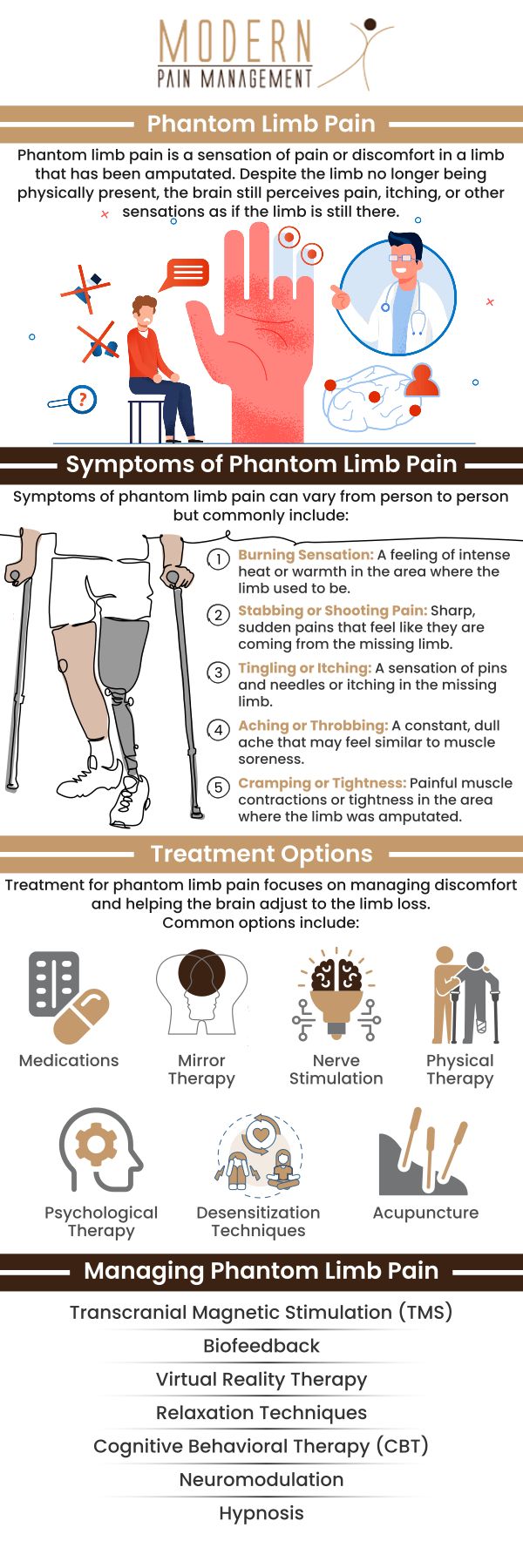
Table of Contents:
Why can phantom limb pain become more noticeable when trying to sleep?
Can sleep position affect nighttime phantom limb symptoms?
How can poor sleep influence the intensity of phantom limb pain?
What can help reduce nighttime episodes of phantom limb discomfort?
How does Dr. George Atallah, DO, at Modern Pain Management address nighttime phantom limb syndrome in Houston, TX?
At Modern Pain Management, we understand that phantom limb pain often becomes more noticeable at night, making restful sleep a challenge for many of our patients. This increase in pain at bedtime is due to a combination of physiological and psychological factors.
During the day, your attention is typically occupied by work, conversations, and other activities, which can help distract your brain from the sensations associated with phantom limb pain. However, at night, as you try to relax and external distractions fade, you may become more aware of internal sensations, including pain in your missing limb.
In addition, simply lying down and preparing for sleep can alter blood flow and nerve activity, sometimes heightening the perception of pain. Emotional factors—such as stress, anxiety, or frustration about the pain—can also surface when you’re trying to rest, further amplifying discomfort. The quiet, low-stimulation environment at night often leaves fewer coping mechanisms in place, allowing your brain to focus more on the pain.
At Modern Pain Management, our multidisciplinary team specializes in helping patients manage and reduce phantom limb pain, especially at night. We offer a comprehensive range of advanced therapies—including medication management, nerve blocks, physical therapy, and innovative neuromodulation techniques—to help you find relief and improve your quality of sleep. We also provide guidance on sleep hygiene and relaxation strategies tailored to your needs.
At Modern Pain Management, we understand that living with an amputation comes with unique challenges, including nighttime phantom limb symptoms—sensations or pain felt in a limb that has been amputated. Recent medical research and our patient experiences confirm that your sleep position can play a significant role in either worsening or relieving these symptoms.
When pressure is unevenly distributed on the residual limb, or when the limb is placed in an awkward or unsupported position during sleep, nerve irritation and circulation problems can occur. This can intensify phantom sensations or pain, making restful sleep more difficult. For example, lying directly on the side of the amputation or allowing the residual limb to twist may increase discomfort.
At Modern Pain Management, we recommend keeping the residual limb well-supported and properly aligned with the rest of your body. Using pillows or specially designed cushions can help, and some patients find relief by gently elevating the limb while sleeping. Our team works closely with each patient to identify optimal sleeping positions and support devices that best address their individual needs.
If you are struggling with nighttime phantom limb pain, we encourage you to experiment with different sleep positions and supports. Our physicians and physical therapists at Modern Pain Management are available to guide you through personalized positioning strategies and discuss additional treatment options to help you achieve restful, comfortable sleep.
At Modern Pain Management, we recognize that poor sleep can significantly impact the intensity and management of phantom limb pain. Research and clinical experience show that disrupted or insufficient sleep interferes with the body’s natural pain-regulating processes, making symptoms more severe and harder to control.
When sleep is compromised, the nervous system becomes more sensitive, heightening the perception of pain signals—even those generated by the brain and spinal cord in cases of phantom limb pain. This increased sensitivity can cause normal nerve activity to be misinterpreted as pain in the missing limb.
Furthermore, inadequate sleep elevates stress hormones like cortisol, which are known to worsen pain and diminish the effectiveness of pain-relief strategies. Sleep deprivation also impairs emotional regulation, making it more challenging for patients to cope with chronic conditions such as phantom limb pain. This can create a vicious cycle: pain disrupts sleep, and poor sleep increases pain intensity.
At Modern Pain Management, our comprehensive approach to treating phantom limb pain includes addressing sleep quality as a crucial component. By helping our patients improve their sleep through personalized interventions—such as medication management, cognitive-behavioral therapy, and lifestyle modifications—we aim to break the cycle of pain and poor sleep. Our goal is to enhance overall well-being and provide effective, long-term relief for individuals living with phantom limb pain.
Nighttime episodes of phantom limb discomfort can be especially distressing, often disrupting sleep and impacting overall well-being. At Modern Pain Management, we recognize how important restful sleep is for recovery and quality of life. Our team offers a comprehensive, evidence-based approach to help reduce the frequency and intensity of phantom limb sensations.
• Self-Care Strategies: Establishing a relaxing bedtime routine is often the first step. We guide our patients through gentle stretching, deep breathing exercises, or mindfulness meditation, all of which can help calm the nervous system before sleep. Many individuals find relief from massaging the residual limb, applying a warm compress, or using a shrinker sock for added comfort. We also advise removing any prosthesis before bedtime to prevent irritation.
• Innovative Therapies: Modern Pain Management offers advanced therapeutic options such as mirror therapy—a technique where the reflection of the intact limb is used to “trick” the brain, often reducing the intensity of phantom sensations when practiced regularly. Our team also provides education on proper sleep hygiene, including keeping the bedroom cool, dark, and quiet, and avoiding caffeine or heavy meals before bed.
• Medical and Interventional Treatments: When phantom limb pain is severe or persistent, our pain specialists are here to help. We may recommend medications such as certain antidepressants, anticonvulsants, or topical treatments to target nerve-related pain. Additional services at Modern Pain Management include physical therapy, transcutaneous electrical nerve stimulation (TENS), and counseling to address the emotional aspects of limb loss.
At Modern Pain Management in Houston, TX, Dr. George Atallah, DO, specializes in providing advanced, patient-centered care for individuals experiencing nighttime phantom limb syndrome—a challenging condition where amputees feel persistent sensations, often painful, in a missing limb, particularly disrupting sleep.
At Modern Pain Management, Dr. Atallah begins with a thorough evaluation of each patient, taking into account their unique medical history, the intensity and frequency of their symptoms, and the impact on their daily life and sleep quality. This comprehensive assessment forms the foundation of a personalized treatment plan.
For patients who do not achieve sufficient relief with conservative measures, Modern Pain Management offers advanced interventional treatments such as nerve blocks and spinal cord stimulation—cutting-edge options that may provide significant pain relief.
Dr. Atallah and the Modern Pain Management team are committed to delivering ongoing support and follow-up, continuously monitoring and adjusting therapies to achieve the best possible outcomes. Their goal is to restore restful sleep, improve comfort, and enhance the overall well-being of every individual living with nighttime phantom limb syndrome.
If you or a loved one is struggling with phantom limb pain, contact Modern Pain Management today to schedule a comprehensive consultation and begin your journey toward relief. We are located at 902 Frostwood Dr #235, Houston, TX 77024. We serve patients from Houston TX, Sugar Land TX, Pearland TX, Jersey Village TX, Missouri TX, Stafford TX, and Richmond TX.
Check Out Our 5 Star Reviews

ADDITIONAL SERVICES YOU MAY NEED





 Send Text
 How May I Help You?