

Can Phantom Limb Pain Be Reduced With Pain Management in Houston, TX
Phantom limb pain can be significantly reduced through modern, targeted interventional pain management techniques that interrupt faulty nerve signals between the limb site and the brain. Patients in Houston, TX can access comprehensive relief plans—including advanced nerve blocks, radiofrequency ablation, and medication management—tailored to their unique symptoms. To explore cutting-edge, personalized treatment options, consult Dr. George Atallah, DO at Modern Pain Management today. For more information, contact us or book an appointment online today. We are located at 902 Frostwood Dr #235, Houston, TX 77024.
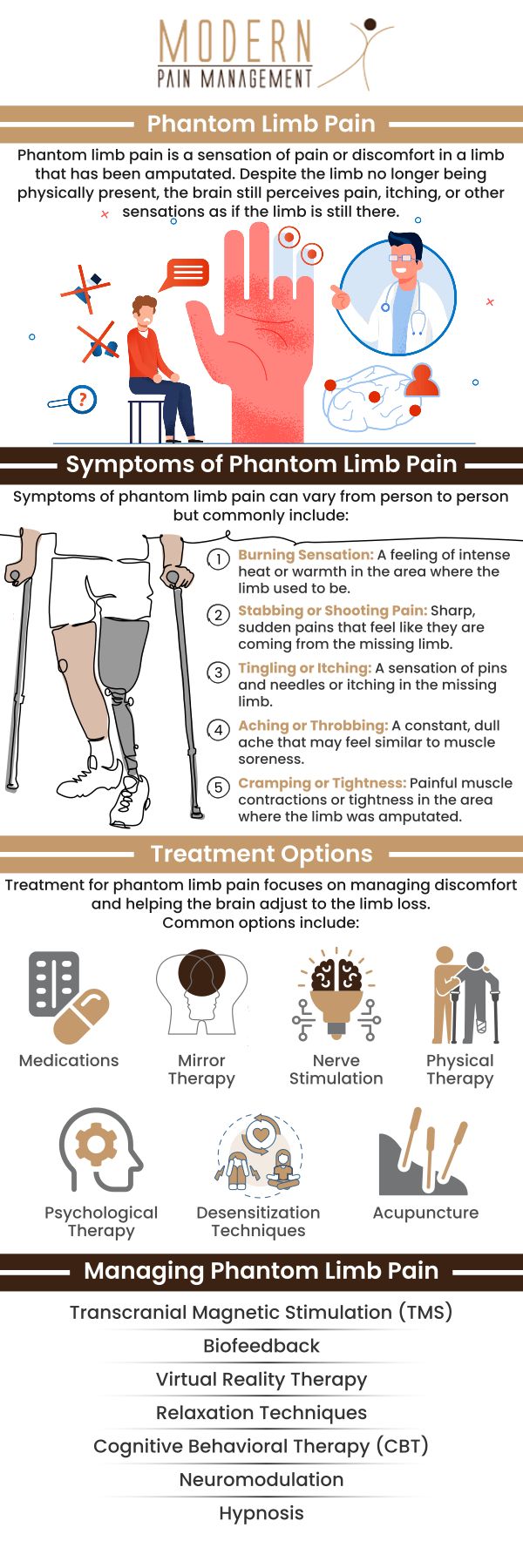
Table of Contents:
What triggers phantom limb pain?
What causes residual limb pain?
What causes phantom limb sensation?
What are the risk factors for phantom limb pain?
Get Specialized Phantom Limb Pain Relief with Dr. George Atallah, DO
The exact cause of phantom limb pain is not fully understood, but several factors are known to contribute to its onset:
• Nervous System Changes: After an amputation, the nerves that once carried signals from the limb to the brain remain active. These nerves can become irritated or form neuromas (abnormal growths of nerve tissue), which may lead to persistent pain sensations.
• Brain Adaptation: The brain regions that previously processed input from the missing limb can reorganize, sometimes misinterpreting signals from other areas of the body as coming from the absent limb.
• Emotional and Psychological Factors: Stress, anxiety, and depression can heighten sensitivity to pain and often exacerbate phantom limb pain.
• Physical Triggers: Factors such as changes in weather, pressure on the residual limb, use of an ill-fitting prosthesis, or even touching the stump can trigger or worsen phantom pain.
Residual limb pain is discomfort or pain felt in the remaining part of a limb following an amputation. It can arise from a variety of sources, such as:
• Nerve Injury or Neuroma Formation: Surgical procedures can sometimes damage nerves, leading to neuromas—tangled masses of nerve tissue that become extremely sensitive and painful.
• Scar Tissue and Prosthetic Issues: Scar tissue may compress nerves, or a poorly fitting prosthetic can cause friction, pressure sores, and skin breakdown, leading to ongoing discomfort.
• Circulation Problems: Reduced blood flow to the residual limb can cause pain or cramping.
• Infection: Skin or deeper tissue infections at the amputation site can be a significant source of pain.
• Musculoskeletal Changes: Joint contractures and muscle imbalances as your body adapts post-amputation may also contribute to discomfort.
• Psychological Factors: Stress, anxiety, or depression can make pain feel more intense and harder to manage.
Phantom limb sensation refers to the feeling that an amputated limb is still present—a phenomenon experienced by many individuals after amputation due to injury or surgery.
These sensations arise from intricate interactions between the peripheral and central nervous systems. When a limb is amputated, the nerves that once communicated with the brain remain active and can continue sending signals. The brain, particularly an area called the somatosensory cortex, which “maps” the body, may continue interpreting these signals as if they are coming from the missing limb. Additionally, the brain undergoes changes—known as cortical reorganization—whereby nearby brain regions begin to take over the area previously dedicated to the lost limb, sometimes resulting in unusual or persistent sensations.
Psychological factors—including the emotional response to amputation—can also play a role in the persistence and intensity of phantom limb sensations.
Phantom limb pain is a complex and challenging condition that can significantly affect patients following an amputation. Our team is dedicated to identifying and addressing the various risk factors associated with phantom limb pain.
One major risk factor for phantom limb pain is the presence of pain in the limb prior to amputation. Patients who have experienced ongoing pain before their surgery are statistically more likely to develop phantom limb pain afterward. Our clinic focuses on comprehensive pre-operative evaluations and pain management strategies to minimize this risk.
The level and cause of amputation are also important considerations. Patients who undergo above-the-knee or above-the-elbow amputations, or those whose amputations result from traumatic injuries, tend to have a higher risk of developing phantom limb pain. At Modern Pain Management Clinic, we work closely with surgical teams to optimize surgical techniques and provide tailored postoperative care, helping to reduce complications such as poor wound healing.
We also understand the critical role of psychological factors. Anxiety, depression, and emotional distress can all contribute to the severity and persistence of phantom limb pain. Our multidisciplinary approach includes mental health support and counseling as part of a holistic treatment plan.
Other factors that may influence risk include age, gender, genetic predisposition, and especially the adequacy of pain control immediately after surgery. Effective pain management is central to our mission—by implementing advanced pain control methods both before and after amputation, we strive to prevent the onset or persistence of phantom limb pain.
At Modern Pain Management Clinic, our commitment is to provide patient-centered, evidence-based care. By understanding and addressing these risk factors, we aim to both prevent and effectively manage phantom limb pain, helping our patients achieve the best possible recovery and quality of life.
Phantom limb pain can develop when the nervous system continues sending pain signals after an amputation, creating sensations such as discomfort, tingling, burning, or sensitivity in the missing limb area. Because each person experiences this condition differently, effective care begins with a detailed evaluation of symptoms, health history, and pain patterns. At Modern Pain Management in Houston, TX, Dr. George Atallah, DO focuses on understanding each patient’s concerns to create an individualized approach for managing phantom limb pain.
Treatment plans may involve a combination of advanced pain management techniques and supportive therapies designed to address abnormal nerve signaling and improve daily comfort. For more information, contact us or book an appointment online today. We are located at 902 Frostwood Dr #235, Houston, TX 77024. We serve patients from Houston TX, Sugar Land TX, Pearland TX, Jersey Village TX, Missouri TX, Stafford TX, and Richmond TX.
Check Out Our 5 Star Reviews

ADDITIONAL SERVICES YOU MAY NEED





 Send Text
 How May I Help You?