

Get the Support You Need for Complex Regional Pain Syndrome (CRPS) in Houston TX
Navigating a diagnosis of Complex Regional Pain Syndrome can feel like wandering through a maze of symptoms that few truly understand. At Modern Pain Management, we provide a beacon of clarity for those struggling with this challenging neurological condition. Led by Dr. George Atallah, DO, our clinic focuses on advanced interventional strategies that target the root of nerve dysfunction. Contact us or book an appointment online today. We are located at 902 Frostwood Dr #235, Houston, TX 77024.
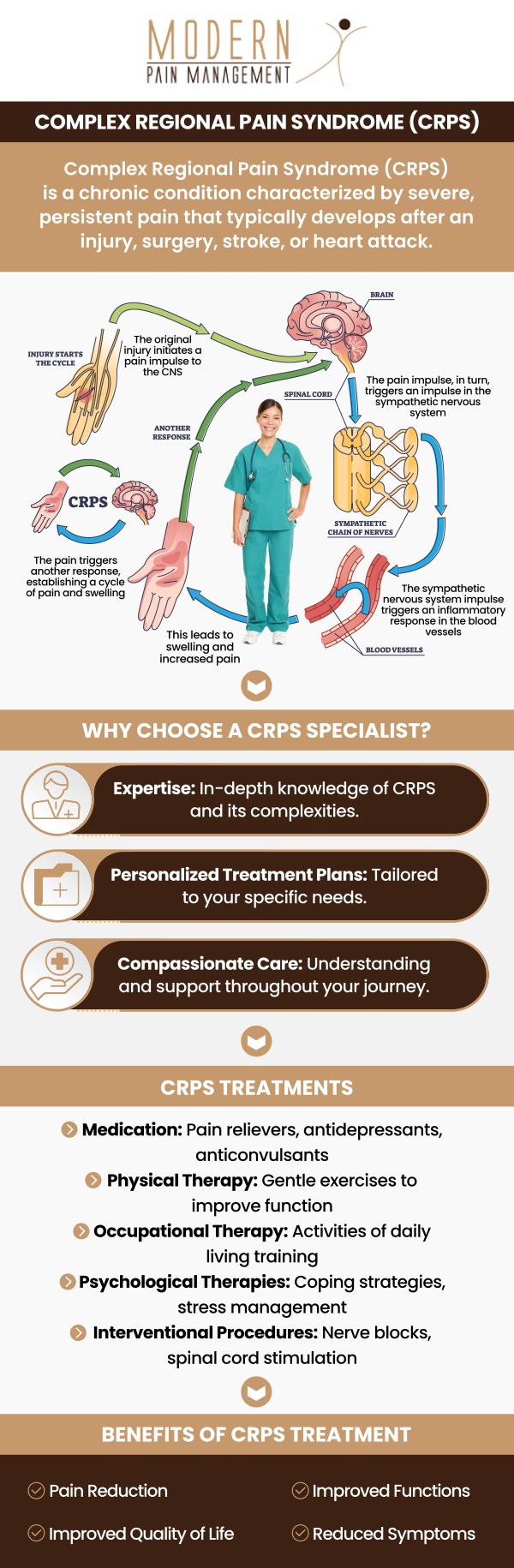
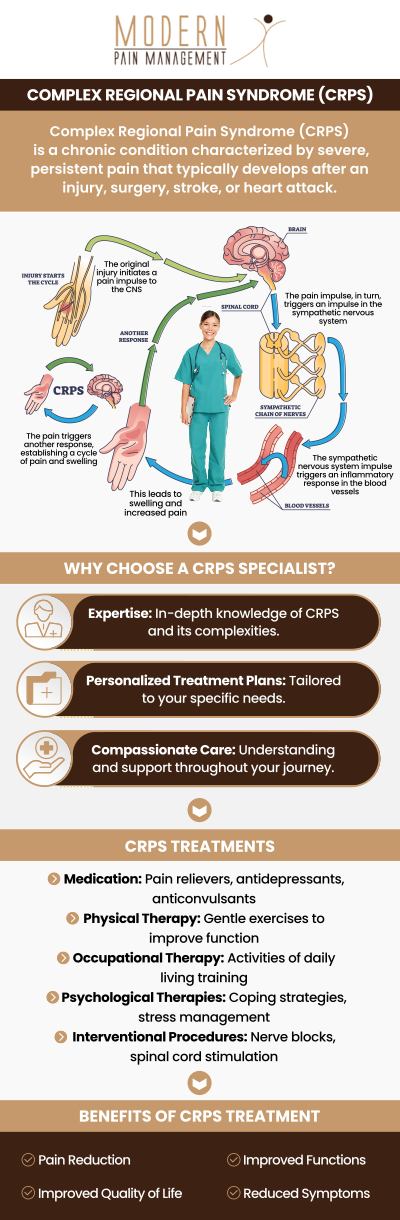
Table of Contents:
What are the signs that CRPS might be worsening, and how should they be addressed?
How can nerve blocks or injections be used to treat CRPS pain?
Is CRPS more common in certain age groups or genders?
Can CRPS be prevented, or are there steps that can reduce the risk of developing it after an injury?
How does Dr. George Atallah, DO personalize the care for Houston patients struggling with the complexities of CRPS?
CRPS is a progressive condition that often moves through stages if left unmanaged. Recognizing the signs of progression is vital for timely intervention. Signs that the condition may be worsening include:
• Spread of Symptoms: The pain may begin to move from the initial site (like a finger) to the entire limb (the arm) or even to the opposite limb, a phenomenon known as “mirror pain.”
• Trophic Changes: You may notice significant changes in skin texture (becoming shiny or thin), abnormal hair or nail growth patterns, and a noticeable loss of muscle mass (atrophy).
• Fixed Deformities: In advanced stages, joints may become stiff or “locked” in a curled position due to shortened tendons and lack of movement.
• Increased Sensitivity: If the area becomes so sensitive that even the vibration of a loud noise or a light breeze triggers a “flare,” the nervous system is becoming increasingly “winded up.”
If you notice these changes, they should be addressed immediately through a multi-modal approach. This often includes adjusting your medication, starting “desensitization” therapy, or considering advanced interventional procedures to “reboot” the nervous system before permanent changes occur in the tissue and bone.
Interventional procedures like nerve blocks are cornerstone treatments at Modern Pain Management. Since CRPS is often fueled by a “short circuit” in the sympathetic nervous system, blocks are designed to interrupt those faulty signals.
1. Stellate Ganglion Blocks: For CRPS affecting the arms, neck, or face, an injection is placed near a collection of nerves in the neck. This “numbs” the sympathetic nerves, often resulting in an immediate warming of the limb and a reduction in pain.
2. Lumbar Sympathetic Blocks: For symptoms in the legs or feet, the injection targets nerves located near the lower spine. By blocking these signals, we can improve blood flow and reduce the “burning” sensation characteristic of the disorder.
These injections serve two purposes: they provide immediate diagnostic information (confirming that the sympathetic system is involved) and offer a “therapeutic window.” During the time the pain is reduced, patients can engage more effectively in physical therapy, which is essential for long-term mobility.
While CRPS can affect anyone, statistical data shows clear demographic trends. Research indicates that the condition is significantly more common in women, who make up approximately 60% to 80% of all cases.
Regarding age, CRPS most frequently appears in individuals between the ages of 40 and 60, though it is increasingly recognized in children and adolescents (where it often presents differently and has a higher rate of full recovery). It is less common in the elderly and rare in very young children. While the exact reason for the gender disparity is still being studied, researchers believe that hormonal influences and differences in immune system responses to injury may play a significant role in why women are more susceptible to this “over-correction” of the nervous system.
While it is impossible to guarantee that CRPS will not develop, several clinical studies suggest that proactive steps can significantly lower the risk following a fracture or surgery.
• Vitamin C Supplementation: There is strong evidence that taking 500mg to 1000mg of Vitamin C daily for 50 days after a wrist or ankle fracture can reduce the incidence of CRPS.
• Early Mobilization: One of the greatest risks for CRPS is prolonged immobilization. Moving the limb as soon as it is medically safe—even if it’s just wiggling the fingers or toes—helps keep the brain’s “map” of that limb healthy.
• Effective Acute Pain Management: Ensuring that post-surgical or post-injury pain is well-controlled from the start prevents the “wind-up” effect in the spinal cord that can lead to chronic syndromes.
Dr. George Atallah, DO believes that the key to treating CRPS is addressing the “whole person” rather than just the painful limb. His osteopathic training allows him to look at how a localized nerve issue impacts a patient’s overall gait, posture, and neurological health. At Modern Pain Management, he utilizes a “step-up” approach—starting with conservative blocks and specialized physical therapy, but moving quickly to advanced neuromodulation like Dorsal Root Ganglion (DRG) stimulation if the pain persists. By creating a customized protocol for every patient, he ensures that the treatment evolves as the condition changes, providing the best possible chance for functional restoration.
CRPS is a difficult journey, but you do not have to walk it alone. In Houston, we are dedicated to providing the specialized care and advanced technology required to quiet the nervous system and help you regain control. Early intervention is the most powerful tool we have; by acting today, we can work together to protect your mobility and your future. Contact us or book an appointment online today. We are located at 902 Frostwood Dr #235, Houston, TX 77024. We serve patients from Houston TX, Sugar Land TX, Pearland TX, Jersey Village TX, Missouri TX, Stafford TX, and Richmond TX.
Check Out Our 5 Star Reviews

ADDITIONAL SERVICES YOU MAY NEED





 Send Text
 How May I Help You?