

Radiofrequency Ablation vs. Nerve Blocks in Sugar Land, TX: What Is the Difference?
Understanding the critical differences between radiofrequency ablation and nerve blocks is essential for patients seeking targeted, non-surgical relief from chronic joint or spinal pain in Sugar Land, TX. At Modern Pain Management Clinic, Dr. George Atallah, DO, evaluates your condition to determine which of these advanced interventional procedures is best suited to address your specific symptoms. For more information, contact us or request an appointment online. We are located at 12930 Dairy Ashford Rd #501-504, Sugar Land, TX 77478.
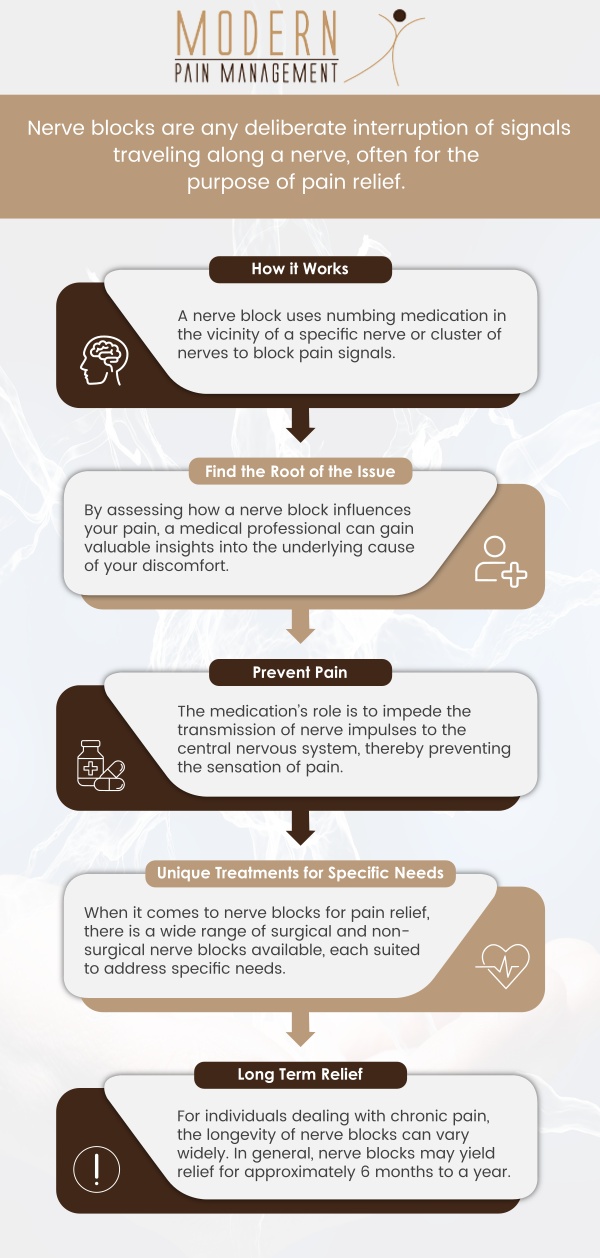
Table of Contents:
How do radiofrequency ablation and nerve blocks work differently?
Who may be a good candidate for radiofrequency ablation instead of a nerve block?
Are nerve blocks used before radiofrequency ablation to confirm the pain source?
What is the recovery time after radiofrequency ablation compared with a nerve block?
What factors help a pain specialist choose between radiofrequency ablation and nerve blocks?
Radiofrequency Ablation and Nerve Block Care With Dr. George Atallah, DO, at Modern Pain Management
At Modern Pain Management Clinic, we offer advanced, minimally invasive procedures to help our patients achieve lasting relief from chronic pain. Two of the most effective techniques we utilize are nerve blocks and radiofrequency ablation (RFA). While both procedures target the nerves responsible for transmitting pain, they do so in different ways—and are tailored to meet your unique needs.
Nerve Blocks:
A nerve block involves carefully injecting an anesthetic, sometimes combined with a steroid, around a targeted nerve or group of nerves. This process temporarily interrupts pain signals traveling from the affected area to your brain, resulting in immediate, short-term pain relief. Depending on your specific condition and the type of medication used, the effects can last from a few hours to several weeks. Nerve blocks can be an excellent option for diagnostic purposes or for providing relief during flare-ups.
Radiofrequency Ablation:
For patients seeking longer-term relief, radiofrequency ablation is a cutting-edge treatment. Under precise imaging guidance, a specialized needle is positioned near the pain-transmitting nerve. We then use radiofrequency energy to heat the targeted nerve tissue, creating a small lesion that disrupts its ability to send pain signals. This approach can provide significant pain reduction for several months to over a year and is especially beneficial for chronic conditions that have not responded to other therapies.
RFA is especially beneficial for patients suffering from pain related to specific nerves, such as chronic facet joint pain in the spine or certain types of neuropathic pain. Our expert pain specialists use state-of-the-art imaging technology to precisely target the problematic nerves, maximizing your chances for longer-lasting relief.
Candidates for RFA typically include individuals who:
• Have chronic pain that has not responded to conservative therapies
• Have had positive results from a nerve block
• Do not have active infections, bleeding disorders, or other medical conditions that could increase procedural risk
• Are seeking longer-term pain relief than what temporary nerve blocks can provide
Our comprehensive evaluation process ensures each patient receives a personalized treatment plan. Before recommending RFA, our board-certified pain management specialists will conduct a thorough assessment of your medical history and current health, ensuring the procedure is safe and appropriate for your unique needs.
RFA works by targeting and disrupting the function of specific nerves responsible for transmitting pain signals. Since this procedure can provide longer-term relief, it’s essential to ensure we are addressing the correct nerves. To do this, our physicians at Modern Pain Management Clinic perform a diagnostic nerve block first. This involves injecting a local anesthetic near the suspected pain-causing nerve(s).
If you experience significant pain relief after the nerve block, it confirms that the targeted nerves are indeed the main source of your discomfort. This diagnostic step increases the likelihood that RFA will be successful for you. However, if the nerve block does not provide relief, our pain specialists will continue to investigate other possible sources of your pain before recommending RFA or other therapies.
By following this careful, step-by-step approach, Modern Pain Management Clinic ensures that every treatment is precisely tailored to your needs, giving you the best possible chance for effective, long-lasting pain relief.
Understanding the differences in recovery between these treatments can help you make informed decisions about your care.
Nerve Blocks
A nerve block involves precisely injecting an anesthetic near targeted nerves to temporarily disrupt pain signals. Thanks to our expertise and use of advanced imaging guidance, the procedure is quick and typically causes minimal discomfort. Most patients experience only mild soreness or bruising at the injection site, which resolves quickly. You can usually return to your normal activities within a few hours to a day.
Radiofrequency Ablation (RFA)
RFA is another highly effective procedure offered at our clinic. This treatment uses radio wave-generated heat to disrupt specific nerves responsible for transmitting pain. Because RFA creates a small, controlled injury to nerve tissue, the recovery period is slightly longer than with a nerve block. It’s common to feel some discomfort, swelling, or a sunburn-like sensation at the treatment site for a few days to up to two weeks. Most patients are able to resume light activities within a day or two, with full recovery and return to strenuous activities within one to two weeks.
Personalized Recovery Guidance
At Modern Pain Management Clinic, your comfort and recovery are our top priorities. We provide detailed aftercare instructions and ongoing support tailored to your needs, whether you choose a nerve block, radiofrequency ablation, or another pain management option. Your provider will discuss what to expect and guide you every step of the way to ensure the best possible outcome.
At Modern Pain Management Clinic, our team of pain specialists is dedicated to providing each patient with the most effective, personalized treatment plan for their unique pain condition. When determining whether radiofrequency ablation (RFA) or nerve blocks are the best option, we carefully consider several important factors to ensure the best possible outcome for our patients.
Diagnosis and Cause of Pain
The first and most important step is identifying the underlying cause of your pain. RFA is often recommended for chronic pain conditions where specific nerves are responsible for transmitting ongoing pain signals—such as arthritis in the facet joints of the spine, sacroiliac (SI) joint pain, or certain types of neuropathic pain. In contrast, nerve blocks may be the preferred choice for treating acute pain flare-ups, for diagnostic purposes, or when the pain is expected to resolve or is short-term in nature.
Expected Duration of Relief
Our goal at Modern Pain Management Clinic is to maximize your quality of life. RFA typically provides longer-lasting relief—often several months at a time—because it interrupts pain signals by targeting and deactivating the problematic nerve fibers. Nerve blocks, which use anesthetics and sometimes steroids, are designed to provide shorter-term relief by temporarily numbing the nerve and reducing inflammation.
Response to Previous Treatments
We often use diagnostic nerve blocks to help predict whether a more lasting procedure like RFA will be effective for you. If you experience significant pain relief from a nerve block, it’s a good indicator that you may benefit from RFA targeting the same nerves for longer-lasting results.
Your Health and Medical History
Every patient undergoes a comprehensive health assessment. RFA may not be suitable for everyone—such as those with certain bleeding disorders, infections, or implanted electronic devices near the treatment area. In these cases, nerve blocks may offer a safer, reversible, and minimally invasive alternative.
Location of the Affected Nerves
Some nerves are better suited to RFA because of their location in the body, while others may respond just as well—or better—to repeated nerve blocks. Our interventional pain specialists use advanced imaging and diagnostic techniques to determine the best approach for your specific condition.
Your Preferences and Goals
Some patients prefer the potential for longer-term relief offered by RFA and are open to a more involved procedure, while others may choose the simplicity and lower risk of periodic nerve blocks. We take the time to discuss all options, answer your questions, and help you make the choice that best fits your needs and lifestyle.
At Modern Pain Management Clinic, Dr. George Atallah, DO, specializes in advanced, minimally invasive pain management solutions to help patients reclaim their quality of life. Among our most effective treatments are Radiofrequency Ablation (RFA) and nerve block procedures, both designed to provide lasting relief for chronic pain conditions such as back pain, neck pain, arthritis, and nerve-related discomfort.
Radiofrequency Ablation (RFA): Precision Pain Relief
During RFA, Dr. Atallah utilizes state-of-the-art technology to deliver targeted radiofrequency energy to specific nerve tissues. This carefully controlled heat interrupts the nerve’s ability to send pain signals to the brain, often resulting in long-term pain relief. The procedure is performed under local anesthesia and advanced imaging guidance, ensuring both precision and patient comfort. Most patients can return home the same day and experience minimal downtime.
Nerve Blocks: Immediate and Targeted Pain Management
Nerve block procedures involve injecting a local anesthetic—sometimes combined with a steroid—near the nerves responsible for transmitting pain. This treatment can provide immediate relief, reduce inflammation, and help identify the exact source of your pain for ongoing treatment planning. Nerve blocks may be used as both a diagnostic tool and a therapeutic intervention for a wide range of chronic pain conditions.
Comprehensive Care and Follow-Up
After your procedure, Dr. Atallah and our team provide personalized aftercare instructions to promote optimal recovery and results. Patients are advised to monitor for any signs of infection at the injection site, limit strenuous activity briefly, and gradually return to normal routines. Follow-up appointments at Modern Pain Management Clinic allow us to monitor your progress and determine if further treatment is needed. For more information, contact us or request an appointment online. We are located at 12930 Dairy Ashford Rd #501-504, Sugar Land, TX 77478. We serve patients from Sugar Land TX, Houston TX, Pearland TX, Jersey Village TX, Missouri City TX, Stafford TX, and Richmond TX. We look forward to serving you!
Check Out Our 5 Star Reviews

ADDITIONAL SERVICES YOU MAY NEED





 Send Text
 How May I Help You?