

Burning, Itching, or Cramping Phantom Limb Pain? Non-Surgical Treatment in Sugar Land, TX
Experiencing relentless burning, intense itching, or severe cramping from phantom limb pain can make everyday life incredibly challenging. At Modern Pain Management in Sugar Land, TX, Dr. George Atallah, D.O, focuses on highly effective, non-surgical solutions to manage these complex sensations. We are committed to designing a personalized care plan that safely alleviates your unique symptoms, increases your functionality, and helps you regain control over your life. Contact us today or schedule a consultation. We are located at 12930 Dairy Ashford Rd #501-504, Sugar Land, TX 77478.
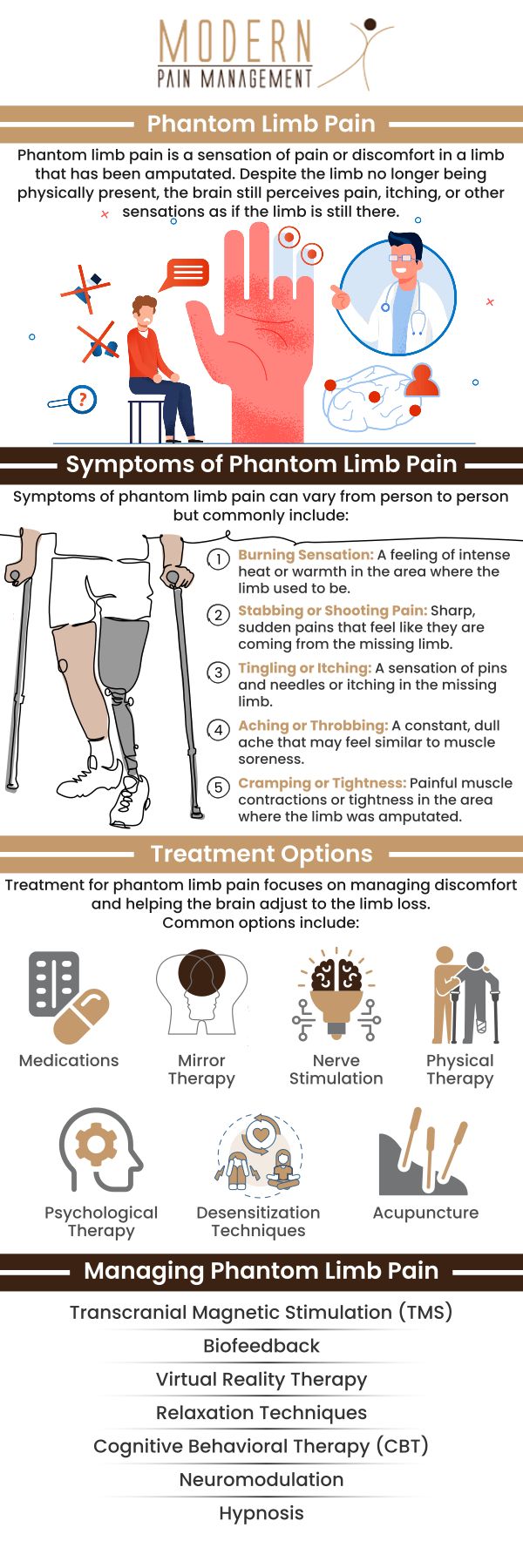
Table of Contents:
Why can phantom limb pain feel like burning, itching, or cramping?
Can different phantom limb sensations require different treatment approaches?
How can phantom limb itching be managed when there is no physical itch?
What treatments may help with cramping sensations in a missing limb?
How does Dr. George Atallah, DO, at Modern Pain Management evaluate burning, itching, and cramping phantom limb pain in Sugar Land, TX?
Phantom limb pain often presents as burning, itching, or cramping sensations, even though the affected limb is no longer present. This complex pain arises because the brain and nervous system continue to “feel” the missing limb. After an amputation, nerves that once transmitted signals from the limb to the brain are severed or damaged. Despite the loss, these nerves may still send signals, which the brain interprets as real sensations—such as pain, temperature changes, or movement.
At Modern Pain Management, we understand that phantom limb pain is not just a physical issue but also a neurological one. The areas of the brain responsible for processing sensations from the lost limb remain active. This can lead to the brain misinterpreting signals from nearby nerves, or even generating pain signals independently. This process, known as neuroplasticity, means the brain is trying to reorganize after injury, but sometimes this adaptation is imperfect, resulting in persistent pain.
Typical sensations—like burning, itching, or cramping—reflect the types of nerve signals most disrupted after amputation. For example, burning pain may stem from damaged nerve endings, while itching can occur because the brain misreads certain nerve activity as itchiness. Cramping sensations may be the brain’s memory of muscle tension or spasms from the lost limb.
At Modern Pain Management, we take a comprehensive, multidisciplinary approach to phantom limb pain. Our team uses advanced diagnostic tools and evidence-based treatments—including medications, nerve blocks, physical therapy, and neuromodulation—to target the underlying neurological mechanisms of pain. We also offer innovative therapies such as mirror therapy and cognitive behavioral interventions, designed to retrain the brain and reduce discomfort.
At Modern Pain Management, we recognize that phantom limb sensations present unique challenges for each individual, requiring personalized treatment strategies. Phantom limb sensations are typically classified as either non-painful (such as tingling, itching, or the persistent feeling that the limb is still present) or painful, known as phantom limb pain.
Non-painful phantom sensations are often benign and may not interfere with daily life. In these cases, our specialists focus on patient education, reassurance, and regular monitoring. If these sensations cause distress or impact quality of life, we offer interventions such as mirror therapy, sensory retraining, or cognitive-behavioral therapy to help patients adapt and regain a sense of normalcy.
Phantom limb pain, however, often requires a more comprehensive, multidisciplinary approach—the hallmark of our practice. Our team utilizes the latest evidence-based treatments, including medications (such as analgesics, antidepressants, or anticonvulsants), advanced therapies like mirror therapy, transcutaneous electrical nerve stimulation (TENS), graded motor imagery, and specialized physical therapy. We also recognize the importance of psychological support and counseling to help patients cope with the emotional aspects of chronic pain. For severe or treatment-resistant cases, our interventional pain specialists may recommend procedures such as nerve blocks or neuromodulation.
At Modern Pain Management, we understand that phantom limb sensations can result from a combination of peripheral, spinal, and central nervous system factors. That’s why our experienced clinicians perform thorough assessments to accurately diagnose the type and severity of each patient’s symptoms. By tailoring treatment plans to individual needs, we strive to maximize symptom relief and restore quality of life.
At Modern Pain Management, we understand that living with an amputation comes with unique challenges—including sensations like phantom limb itching. Phantom limb itching is the perception of itch in a limb or body part that has been amputated. Much like phantom limb pain, it occurs because your brain and nervous system continue to send and receive signals from nerves that once served the now-missing limb. Even though there is no physical source of the itch, the experience can be intensely real and distressing.
Our team specializes in a comprehensive, patient-centered approach to managing phantom limb sensations, including itching. We offer a range of evidence-based therapies designed to calm the nervous system and provide relief:
• Mirror Therapy: This innovative technique uses mirrors to create the illusion that both limbs are present. By moving and scratching the reflected intact limb, your brain can sometimes be “tricked” into thinking the itch in the missing limb has been relieved. Our therapists are trained to guide you through this process safely and effectively.
• Sensory Re-education: We encourage patients to stimulate the area around the amputation site using various textures and temperatures. This helps your brain recalibrate its perception and can reduce uncomfortable sensations, including itching.
• Medication Management: Our pain specialists may recommend medications such as gabapentin, pregabalin, or certain antidepressants, which can dampen abnormal nerve signals responsible for phantom sensations. In some cases, topical treatments applied to the residual limb, like menthol or capsaicin cream, may also provide relief.
• Psychological Support: Phantom limb sensations can be distressing. Our integrated care includes access to psychological therapies such as cognitive-behavioral therapy (CBT) and mindfulness training, which can help you cope with the emotional and mental impacts of phantom sensations.
At Modern Pain Management, we know that every patient’s experience is unique. We work closely with you to develop a personalized treatment plan, combining the latest in medical science with compassionate, supportive care. Many of our patients find that with time and the right combination of therapies, the intensity and frequency of phantom limb itching can be significantly reduced.
At Modern Pain Management, we understand that cramping sensations in a missing limb—often associated with phantom limb pain or residual limb discomfort—can be deeply distressing for individuals following amputation. Our multidisciplinary team specializes in the latest evidence-based treatments to address these complex pain issues and improve your quality of life.
Personalized Medication Management:
Our pain management specialists may recommend medications such as muscle relaxants, gabapentin, pregabalin, or specific antidepressants, carefully tailored to target nerve pain and muscle cramping unique to your situation.
Advanced Physical Therapy & Rehabilitation:
In collaboration with experienced physical therapists, we design individualized exercise programs focusing on stretching, strengthening, and enhancing circulation in the residual limb to reduce tension and minimize cramping.
Innovative Therapies:
Modern Pain Management offers cutting-edge options such as mirror therapy, which uses visual feedback to help retrain the brain and alleviate phantom limb sensations. We also provide transcutaneous electrical nerve stimulation (TENS), a non-invasive technique that can interrupt pain signals and reduce discomfort.
Prosthetic Evaluation & Adjustment:
Our team works closely with prosthetists to ensure your prosthesis fits comfortably. If cramping is related to improper limb alignment or pressure points, we coordinate adjustments or refitting to resolve these issues.
Expert Consultation:
For persistent or severe cramping, our board-certified pain management physicians will develop a personalized care plan, integrating the most effective treatments for your unique needs. At Modern Pain Management, our mission is to provide compassionate, state-of-the-art care for individuals living with phantom limb pain and residual limb discomfort.
At Modern Pain Management in Sugar Land, TX, Dr. George Atallah, DO, is committed to providing comprehensive care for patients experiencing burning, itching, and cramping phantom limb pain. Dr. Atallah utilizes a patient-centered approach, beginning each evaluation with a thorough medical history and physical examination tailored to the unique challenges of phantom limb pain.
At Modern Pain Management, Dr. Atallah listens attentively to each patient’s description of their symptoms—including the quality, intensity, and triggers of their phantom sensations. He asks detailed questions about when the pain began, how long it lasts, and whether it occurs constantly or intermittently. Understanding what worsens or alleviates the discomfort helps Dr. Atallah design a more effective, individualized treatment plan.
During the physical examination, Dr. Atallah carefully assesses the residual limb for conditions that can contribute to or mimic phantom limb pain, such as neuromas, infection, skin changes, or improper prosthetic fit. He also evaluates the sensitivity of the area and considers other possible sources of neuropathic pain. When necessary, Modern Pain Management employs advanced diagnostic tools—such as imaging studies or nerve conduction tests—to rule out other causes like nerve entrapment or vascular issues.
By combining expert medical evaluation with compassion and the latest diagnostic techniques, Dr. Atallah at Modern Pain Management develops personalized treatment strategies that address both the physical and emotional aspects of phantom limb pain—helping patients achieve improved function and a better quality of life. Contact us today or schedule a consultation. We are located at 12930 Dairy Ashford Rd #501-504, Sugar Land, TX 77478. We serve patients from Sugar Land TX, Houston TX, Pearland TX, Jersey Village TX, Missouri City TX, Stafford TX, and Richmond TX.
Check Out Our 5 Star Reviews

ADDITIONAL SERVICES YOU MAY NEED





 Send Text
 How May I Help You?