

How Do Pain Specialists Treat Phantom Limb Pain in Sugar Land, TX?
At Modern Pain Management, our pain specialists treat phantom limb pain by evaluating symptoms, identifying contributing factors, and creating personalized treatment plans based on each patient’s needs. Treatment may include medication management, targeted therapies, and supportive approaches to help improve comfort and daily function. Dr. George Atallah, DO, provides specialized pain care for individuals seeking phantom limb pain treatment. Contact us today or schedule a consultation. We are located at 12930 Dairy Ashford Rd #501-504, Sugar Land, TX 77478.
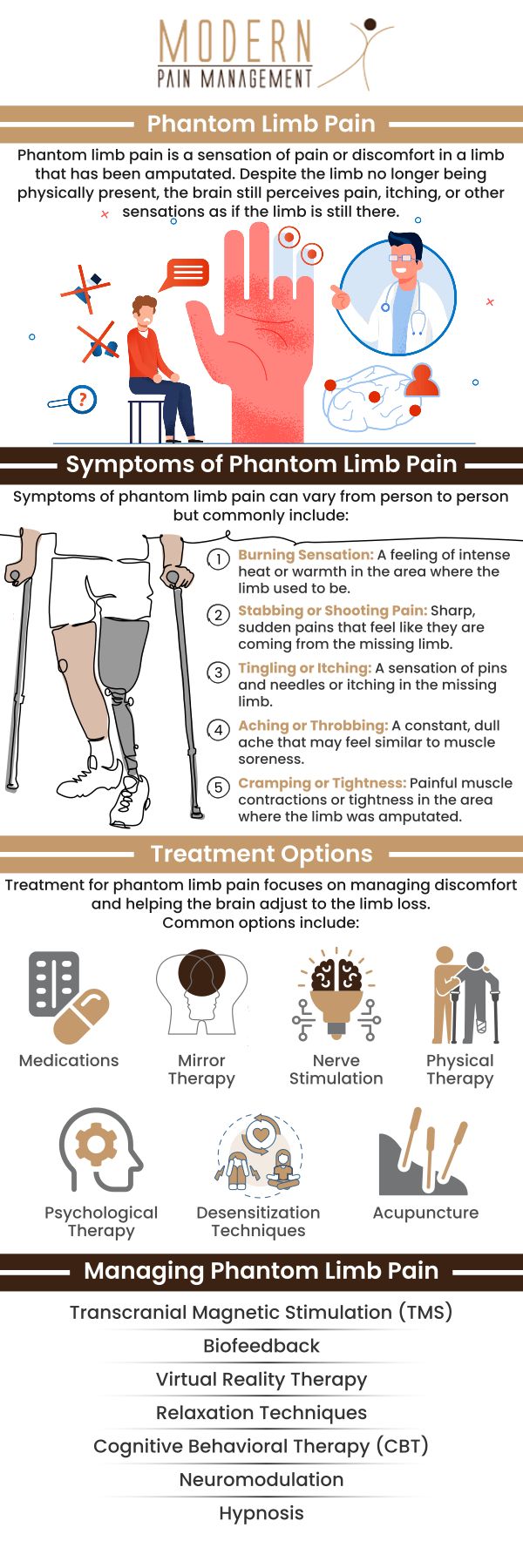
Table of Contents:
What are the complications of phantom limb pain?
How is phantom limb pain diagnosed?
What can I expect if I have phantom limb pain?
How long do phantom pains last?
When should I see a pain management doctor for phantom limb pain?
Professional Phantom Limb Pain Care in Sugar Land, TX with Dr. George Atallah, DO
Phantom limb pain is a complex condition with far-reaching effects on both physical and psychological health. One of the most significant challenges our patients face is chronic, persistent pain in the absent limb, which can severely interfere with daily activities and diminish overall quality of life. This ongoing discomfort often leads to difficulties with sleep, reduced mobility, and can complicate the effective use of prosthetic devices.
The impact of phantom limb pain extends beyond physical symptoms. Many individuals experience an increased risk of psychological complications such as depression, anxiety, and mood disturbances. Persistent pain and the emotional trauma of limb loss may result in social withdrawal, making it harder for patients to return to work or engage in social activities.
Phantom limb pain can also hinder rehabilitation and recovery after amputation. Patients may struggle to adjust to a prosthesis or experience setbacks in physical therapy, which can reduce motivation and delay progress. Additionally, the need for ongoing pain relief may lead to reliance on medications, which carries the risk of side effects, tolerance, or misuse.
At Modern Pain Management Clinic, we understand that the complications of phantom limb pain go far beyond physical sensation. That’s why we offer a comprehensive, multidisciplinary approach—including advanced pain management techniques and medication management—to address the full spectrum of challenges our patients face. Our goal is to improve not only pain control, but also emotional well-being, social participation, and rehabilitation outcomes for those affected by phantom limb pain.
Phantom limb pain begins with a comprehensive and compassionate evaluation by our experienced pain specialists. Our team understands the unique challenges faced by individuals who have experienced limb loss, and we are committed to providing thorough and effective care.
The diagnostic process starts with an in-depth medical history, where our providers will ask you to describe your pain—including when it began, its intensity, frequency, and any factors that may worsen or relieve your symptoms. We will carefully review your surgical and medical history to confirm amputation and rule out other potential causes of pain.
A detailed physical examination is performed to assess your residual limb for signs of infection, neuromas, poor wound healing, or other localized issues. Our clinicians may also conduct neurological assessments to evaluate sensation and motor function in the affected area. Since phantom limb pain is a diagnosis of exclusion, we may recommend advanced imaging such as X-rays, ultrasound, or MRI, along with blood tests, to rule out bone, soft tissue, or systemic conditions.
Ultimately, the diagnosis of phantom limb pain at Modern Pain Management Clinic is based on your reported symptoms—the sensation of pain originating from a limb that is no longer present—combined with a careful exclusion of other possible causes.
If you are experiencing phantom limb pain, you may notice sensations that feel as if they are coming from a limb. These sensations can range from mild discomfort to severe pain and may feel like burning, throbbing, shooting, or cramping. The pain can be constant or intermittent, and its intensity may change over time. Phantom limb pain often begins soon after amputation, but it can also develop weeks, months, or even years later. Certain factors—such as stress, weather changes, or touch to the remaining limb—may trigger or worsen your symptoms.
At Modern Pain Management Clinic, we understand how challenging and confusing phantom limb pain can be. This condition occurs because nerves at the site of amputation and the brain’s sensory pathways continue to send and receive signals, even though the limb is no longer present. Along with pain, you might also experience tingling, itching, or the sensation that your missing limb is still there or moving. These symptoms are common and do not indicate a problem with your recovery.
Our team at Modern Pain Management Clinic is dedicated to providing compassionate, comprehensive care for individuals living with phantom limb pain. We offer a range of advanced treatment options, including:
• Medications to help control pain and uncomfortable sensations
• Nerve stimulation techniques such as TENS or spinal cord stimulation
• Mirror therapy and other innovative approaches
• Psychological support to help you cope with the emotional impact of chronic pain
We believe in a personalized, multidisciplinary approach. Our specialists will work closely with you to develop a treatment plan tailored to your unique needs and goals. If you are struggling with phantom limb pain, please let our team know. Together, we can help you find relief and improve your quality of life.
Phantom pain is a unique and often distressing sensation that feels as though it comes from a limb or part of the body that has been amputated. The duration and intensity of phantom pain can vary widely—some people experience brief episodes that improve within weeks or months after surgery, while others may struggle with chronic pain for years.
Our team understands that each patient’s experience is different. Phantom pain can fluctuate in both frequency and severity, with periods of relief followed by unexpected recurrences. While many individuals notice an improvement within the first six months post-amputation, some continue to face long-term discomfort.
Phantom limb pain is a challenging condition that can greatly affect your quality of life after amputation. At Modern Pain Management Clinic, our team understands how distressing it can be to experience ongoing pain, burning, tingling, or cramping in a limb that is no longer there—especially when these symptoms do not improve with home remedies or over-the-counter medications.
If your phantom limb pain is interfering with your daily activities, sleep, or emotional well-being, or if you notice your pain is worsening, it’s important to seek specialized care. Modern Pain Management Clinic offers advanced therapies and a comprehensive, individualized approach to help you find relief.
Early intervention is key to preventing phantom limb pain from becoming chronic and more difficult to manage. Our pain management specialists are dedicated to helping you regain comfort and function.
At Modern Pain Management in Sugar Land, TX, Dr. George Atallah, DO treats phantom limb pain by targeting the specific nerve signals and central nervous system pathways responsible for post-amputation discomfort. Rather than relying solely on temporary masking solutions, Dr. Atallah performs a detailed clinical evaluation to identify the exact mechanism behind your burning, shooting, or throbbing pain. Using a personalized, interventional approach, he combines state-of-the-art therapies—such as targeted peripheral nerve blocks, radiofrequency ablation, peripheral nerve stimulation (PNS), and tailored nerve-modulating medications—to disrupt hyperactive pain signals and help retrain the brain’s sensory pathways. If you are seeking specialized, compassionate care close to home in Sugar Land, consult Dr. George Atallah, DO today to discover an advanced treatment plan designed to restore your comfort and daily function. Contact us today or schedule a consultation. We are located at 12930 Dairy Ashford Rd #501-504, Sugar Land, TX 77478. We serve patients from Sugar Land TX, Houston TX, Pearland TX, Jersey Village TX, Missouri City TX, Stafford TX, and Richmond TX. We look forward to serving you!
Check Out Our 5 Star Reviews

ADDITIONAL SERVICES YOU MAY NEED





 Send Text
 How May I Help You?